
Mountain View’s Castro Street: From Railroad Stop to Silicon Valley Dining Destination
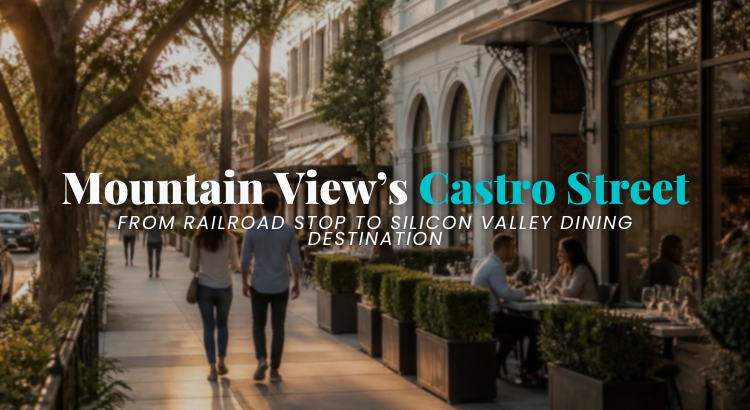
If you think Silicon Valley is all technology, office parks, and beautiful scenery—but not much everyday life—Mountain View’s Castro Street might change your mind.
Today, Castro Street is the lively center of Downtown Mountain View, California, known for its restaurants, cafés, cultural events, farmers market, public transportation, and walkable streets.
But the story of Castro Street goes much deeper than its dining scene.
Its history is closely connected to the story of Mountain View itself—from stagecoach stop and agricultural center to railroad town and, eventually, one of the most recognizable communities in Silicon Valley.
For anyone considering living in Mountain View, buying a home in Mountain View, or relocating to Silicon Valley, understanding this history also helps explain why Downtown Mountain View has such a distinctive lifestyle today.
From Stagecoach Stop to Mountain View
The name Mountain View dates back to 1852.
During the 19th century, the area served as a stop along the route between San Francisco and San Jose. From the station, the Santa Cruz Mountains could be seen in the distance, inspiring the straightforward name "Mountain View."
Castro Street became the community's primary north-south route and eventually developed into the center of the town.
What is now a lively downtown was once surrounded by orchards and agricultural businesses.
In the mid-19th century, Mountain View was an important agricultural trading area, with fruit orchards and packing facilities throughout the surrounding region.
The arrival of the railroad played an important role in transforming the community.
Fresh and dried fruit could be transported beyond the local area, connecting Mountain View's agricultural economy with markets throughout the country.
That transportation infrastructure helped establish the foundation for the downtown we recognize today.
How the Railroad Shaped Downtown Mountain View
Transportation has always been part of Mountain View's identity.
The railroad helped move agricultural products, people, and commerce through the community. Today, Caltrain continues that transportation legacy, connecting Mountain View with communities throughout the Peninsula and the broader Bay Area.
The area around today's transit center remains one of the most connected parts of the city.
For residents, that means Downtown Mountain View offers something that can be difficult to find in Silicon Valley: the ability to combine public transportation, restaurants, shopping, entertainment, and everyday conveniences within a relatively compact, walkable area.
For professionals commuting to Silicon Valley employment centers, that connectivity can be an important part of the lifestyle.
From Orchards to One of Silicon Valley’s Most Walkable Downtowns
Mountain View eventually evolved far beyond its agricultural roots.
As the semiconductor and technology industries transformed the region, fruit-packing facilities and orchards gave way to the technology-driven economy that now defines Silicon Valley.
But Castro Street retained its role as the center of the community.
Today, the historic street has become a destination for dining, coffee, entertainment, and community life.
Walk down Castro Street and you'll find a remarkably diverse restaurant scene, with options ranging from Chinese, Japanese, Korean, and Vietnamese cuisine to Mediterranean restaurants and other international flavors.
It's also a place where people can stay out late, meet friends, grab coffee, enjoy dinner, or simply walk through downtown.
That everyday energy is one of the things that makes Mountain View different from communities that are primarily defined by their proximity to major employers.
Historic Buildings Meet Modern Silicon Valley
One of the most interesting aspects of Downtown Mountain View is the way its history remains visible alongside its modern identity.
Historic buildings and structures provide reminders of the community's agricultural and civic past, while newer restaurants, cafés, businesses, and technology professionals represent the Silicon Valley of today.
The Adobe Building, constructed with adobe bricks in the 1930s, is one example of Mountain View's historic architectural character.
These pieces of history give Downtown Mountain View a sense of continuity that can be difficult to replicate in newer developments.
The result is a neighborhood where old and new coexist: historic architecture alongside modern restaurants, longtime local businesses alongside technology companies, and a small-town atmosphere within one of the world's best-known technology regions.
More Than Restaurants: Mountain View’s Community Life
Castro Street isn't only about food.
The surrounding downtown is also an important gathering place for community events and cultural activities.
Sunday Farmers’ Market
The Mountain View Farmers’ Market brings local residents together near the downtown transit area, creating a weekly community tradition centered around fresh produce, food, and local vendors.
Mountain View Art & Wine Festival
The annual Mountain View Art & Wine Festival brings art, food, wine, entertainment, and visitors into the downtown area.
It is another example of how Mountain View combines the energy of a technology hub with the traditions of an established California community.
Performing Arts
Near Castro Street, the Mountain View Center for the Performing Arts provides a venue for theater, music, and other performances.
Together, these events and institutions give Downtown Mountain View something beyond convenience: a genuine sense of community.
Why Castro Street Matters for Mountain View Real Estate
When people evaluate Mountain View real estate, the conversation naturally goes beyond the house itself.
Location matters.
So do transportation, walkability, restaurants, parks, cultural amenities, schools, employment centers, and the overall lifestyle a neighborhood provides.
Castro Street offers a particularly interesting example because so many of these elements are concentrated within and around Downtown Mountain View.
For buyers relocating to Silicon Valley, proximity to Caltrain and major employment centers can be an important consideration.
For residents who value walkability, having restaurants, cafés, markets, entertainment, and community events nearby can change how they experience their everyday life.
And for homeowners thinking about resale, understanding the characteristics that make a location desirable is an important part of evaluating a property.
Mountain View: A Balance of Convenience and Community
Silicon Valley is known around the world for technology and innovation.
But the communities that surround the technology industry each have their own personalities.
Mountain View stands out because it offers a combination of Silicon Valley connectivity and traditional downtown living.
You can work in a global technology center and still walk down a neighborhood street for dinner.
You can take Caltrain to another part of the Bay Area and return to a downtown where restaurants and cafés remain active into the evening.
You can visit a farmers market on Sunday, attend a performance, or simply walk along Castro Street.
That balance between convenience and community is a major part of what makes Mountain View appealing to people who want more from Silicon Valley living than proximity to an office.
Exploring Mountain View Real Estate With a Local Perspective
I've spent 23 years in Bay Area real estate, helping buyers and sellers understand not only individual properties but also the neighborhoods and communities surrounding them.
As a Silicon Valley and Bay Area real estate agent, I believe understanding a home's location is just as important as understanding the home itself.
My work with Yvonne Yang Homes also includes extensive experience with home renovation and home preparation. For sellers, that means looking at how a property can be prepared, positioned, and presented before it reaches the market. For buyers, it means understanding a home's potential—not just what it looks like today.
That combination of neighborhood knowledge, real estate experience, and hands-on understanding of home preparation can be particularly valuable in established Silicon Valley communities such as Mountain View.
Experience Mountain View One Street at a Time
Castro Street is more than a restaurant district.
It is a living piece of Mountain View history.
Its story begins with stagecoaches, orchards, agricultural trade, and the railroad. Today, it continues with restaurants, cafés, public transportation, farmers markets, cultural events, and the daily rhythm of Silicon Valley life.
For people considering moving to Mountain View, buying Mountain View real estate, or relocating to Silicon Valley, Castro Street offers a glimpse into what makes this community distinctive.
It is a place where history and technology, convenience and community, and small-town character and Silicon Valley energy come together.
I'm Yvonne Yang, and after 23 years in Bay Area real estate, I continue to explore the communities that make this region unique—one street, one neighborhood, and one community at a time.
Frequently Asked Questions About Castro Street and Downtown Mountain View
What is Castro Street known for in Mountain View?
Castro Street is the heart of Downtown Mountain View and is known for its restaurants, cafés, walkable streets, community events, cultural venues, and convenient access to Caltrain and other public transportation.
Is Downtown Mountain View walkable?
Downtown Mountain View is one of the more walkable areas of the city, with restaurants, cafés, entertainment, public transit, and community amenities concentrated around Castro Street.
What is the history of Mountain View, California?
Mountain View's history includes its early role as a stagecoach stop, agricultural and fruit-packing center, and railroad community before becoming part of today's Silicon Valley technology economy.
Does Caltrain serve Mountain View?
Yes. Caltrain serves Mountain View, providing rail connections along the Peninsula and into the broader Bay Area.
Why do people move to Mountain View?
People are drawn to Mountain View for a combination of Silicon Valley employment opportunities, transportation access, established neighborhoods, community amenities, dining, cultural activities, and proximity to other Bay Area communities.
Is Mountain View a good place to live for Silicon Valley professionals?
Mountain View offers a lifestyle that combines proximity to major Silicon Valley employment centers with walkable downtown amenities, restaurants, public transportation, and community activities. Individual neighborhoods and properties vary, so buyers should evaluate location, commute, housing type, schools, and other priorities based on their needs.
What should I consider when buying a home in Mountain View?
Beyond the property itself, consider the specific neighborhood, commute, transportation options, schools, lot and home characteristics, renovation potential, property condition, and long-term resale considerations. A local real estate professional can help you evaluate how these factors apply to a specific property.


Comments